Solar PV and fire safety: what actually reduces the risk
Fires involving solar PV are rare. But when they do happen, the DC side of the system is usually involved: a connector, a cable or a junction box that has been heating up for months or years. And because the DC side can't simply be switched off while there's daylight, it also matters for anyone dealing with the building afterwards.
Here are the practical things that genuinely reduce the risk, in order of where we'd start.
1. Get the connections right
Most DC faults start at a connection. Every panel adds at least two DC connectors to a string, and each carries full string current for decades. A connector that's mixed with another brand, half-seated or badly crimped has higher contact resistance, and heat rises with resistance. Over time that heat damages the contact, resistance rises further, and an arc can follow.
The fixes are simple: genuine connectors, matched like-for-like, the right crimp tool, push until it clicks and tug-test. We go into the detail, with the numbers, in why connectors matter.
2. Bring the DC voltage down when it matters
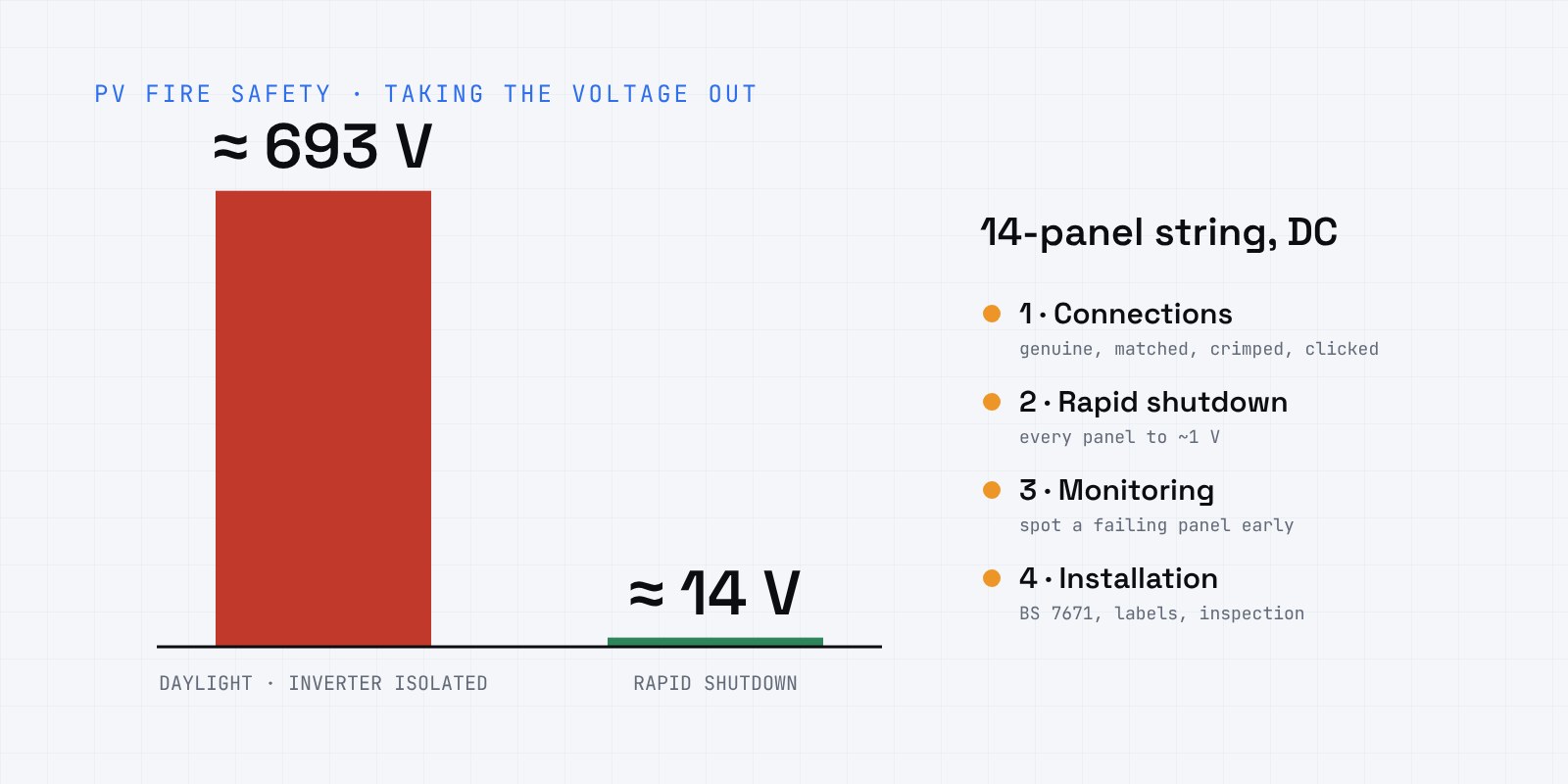
Isolating the inverter doesn't make a PV string safe. In daylight, a 14-panel string can sit at around 700 V DC on the roof and through the building.
Panel-level rapid shutdown solves that. With Archai optimisers, each panel drops to about 1 V when shutdown is triggered, so the same string falls to around 14 V. Shutdown happens when you press the RSD button on the gateway, or automatically if the gateway loses its AC supply. See rapid shutdown at panel level for how it works and how to test it.
3. Watch every panel
A connection that's starting to fail often shows up in the data before it shows up anywhere else: one panel's output falls away, or its temperature reading is out of line with its neighbours. Panel-level monitoring makes that visible. With Archai, every optimiser reports its voltage, current, power and temperature through SolarSync, and you can set alerts.
It's not a substitute for good installation, but it gives you a chance to catch a problem early.
4. Install and inspect properly
- Qualified installers, working to BS 7671 and the inverter and panel manufacturers' instructions.
- Cable management that keeps DC cables supported, protected from sharp edges, and out of standing water.
- Clear labelling of DC isolators and cable routes, so anyone working on the building knows what's there.
- Periodic inspection, especially of connectors and anywhere cables have been disturbed.
The short version
Good connections stop most problems before they start. Rapid shutdown takes the voltage out of the system when someone needs it gone. Panel-level monitoring gives you early warning. None of these is complicated, and together they make a real difference.
If you'd like to talk through fire-safety questions on a specific project, get in touch.
Spec Archai on your next job
Datasheets, trade pricing and compatibility checks for installers and distributors.